
Auricle®
Auricle is developing an investigational neurostimulation implant to restore the ability to understand speech in patients with debilitating hearing loss.
Why it matters
I can hear, but I can't understand.
People tend to lose high frequency hearing first. Patients with severe-to-profound high-frequency hearing loss often complain they can hear but cannot understand, even with the most powerful hearing aids. That is because they have lost the ability to hear the sounds that are vital to understanding speech.
Hear the sounds
Current treatments for hearing loss leave a gap
Hearing aids
Hearing aids provide acoustic amplification, making sound louder, and can work well for mild to moderate hearing loss.
With severe or profound sensorineural hearing loss, hair cells inside the cochlea may be too damaged to convert mechanical vibrations into neural signals effectively. Making sound louder may no longer be enough.
THE GAP
Cochlear implants
Cochlear implants bypass damaged or dysfunctional hair cells to electrically stimulate auditory neurons within the cochlea.
Implantation typically involves drilling through the mastoid bone behind the ear to access the cochlea and insert an electrode array.
The procedure can cause significant, permanent loss of residual hearing in the implanted ear. Some patients retain useful natural hearing, while others lose it entirely.
For patients that fall in the gap
Everyday conversations become harder
- For some people with severe high-frequency hearing loss, hearing aids offer limited benefit, leaving everyday speech difficult to understand.
- Cochlear implants may help, but concerns about surgery and losing remaining hearing can make people reluctant to proceed.
- The ongoing struggle can be isolating. Hearing loss is associated with depression and an increased risk of dementia.
The opportunity
Our goal: restore what's missing, preserve what's left
A novel approach to hearing restoration
Auricle is developing a minimally invasive neural implant with the goal of restoring high-frequency hearing with minimal risk to residual hearing.
By avoiding disruption of the internal structure of the cochlea, our extracochlear approach aims to be significantly less invasive and reversible.
Potential impact
Our compass: helping people understand speech again
Experience what it's like to have high-frequency hearing loss and how extracochlear stimulation has the potential to help.*
High-frequency hearing loss
Hear speech with severe-to-profound high-frequency hearing loss and remaining low-frequency hearing.
With 1 channel of stimulation
Hear the same speech with one simulated electrical channel added. Can you understand the words?
With 4 channels of stimulation
Now compare four simulated channels. Is the speech easier to understand?
Full-frequency reference
Listen to the original recordings with all speech frequencies intact.
Illustrative hearing profiles. Electrode positions are schematic, not predicted hearing thresholds; the lights follow speech in each audio channel.
* Illustration only. Not the Auricle® System, and not a clinical result.
Auricle
Auricle is a neurotechnology company based in Mountain View, California. The company is building a minimally invasive brain-computer interface (BCI) to restore hearing. Founded out of Stanford Biodesign, incubated at Stanford Medicine, backed by Y Combinator and located at Fogarty Innovation.
Key people
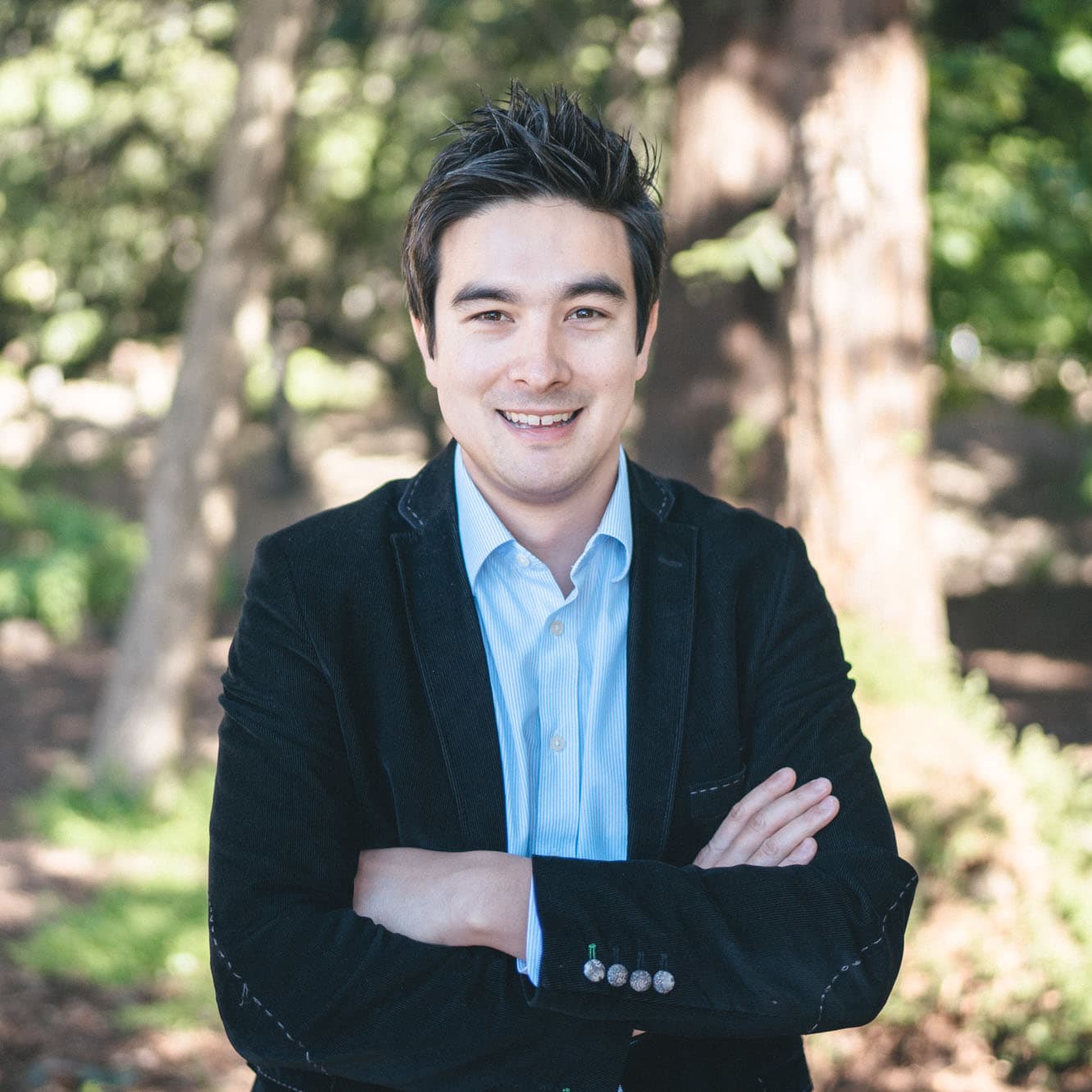
Francis Wong
MD, MBA, MPH
Co-founder & CEO

Ian Baranowski
BS, MS
VP R&D

Peter Santa Maria
MD, PhD
Co-founder and Chief Medical Advisor
Supporters, investors & partners









Contact
Get in touch.
We welcome research collaboration, investment discussions and general enquiries.
Pre-clinical, and not recruiting patients.
- Enquiries
- info@auricle.com